Friday, October 2, 2009

'Halo 3: ODST' Enters the Fray


The latest installment of the Xbox 360 "Halo" franchise arrives today,
and fans worldwide are lining up to get their hands on the wildly popular game, dubbed "Halo 3: ODST."

The abbreviation in the title stands for "Orbital Drop Shock Troopers," a group of fighters well-known to "Halo" fans but only as supporting characters in previous versions of the game. PC World sums it up like this:

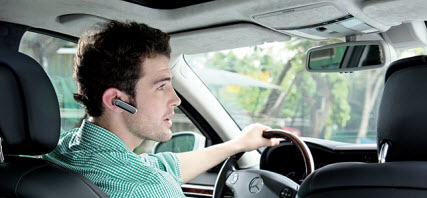
Solar-Powered Hands-Free Headset


We've seen several Bluetooth car kits that get power from the sun, but this solar-powered headset from Mobile Brando ($66.90) is a first.It has a built-in solar panel to provide virtually unlimited standby power when the sun is out, and it also comes with a USB charging cable for those cloudy days or when you're stuck inside.

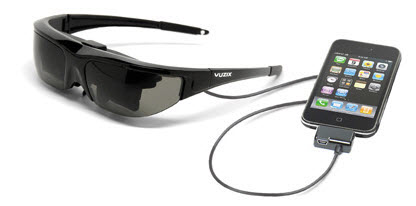
An Excuse to Wear Sunglasses at Night


You can't carry your wide-screen TV with you, so the Vuzix Wrap 310 video eyewear (available this fall) lets you bring the experience with you. The sunglasses-style Wrap 310 allows viewing a 16:9 wide-screen video from portable DVD players, laptop computers, portable media players, mobile phones with a video output and all iPod and iPhone models.According to Vuzix, the Wrap 310's twin high-resolution video displays project an image that's equivalent to a 52-inch wide-screen TV when viewed from 9 feet away. The glasses also have removable noise-isolating earphones and can run for up to six hours on a pair of AA batteries.

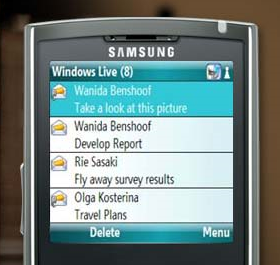
On the Go With Windows Live for Mobile


You no longer need to be tied to your PC to access all of your favorite Windows Live programs and features. Windows Live for Mobile lets you to do it from your cell phone while on the go.You can check your Hotmail, Windows Live and MSN e-mail accounts while getting the same experience you would on a PC -- graphics, Web links and photos -- and even respond to e-mails with voice recordings. With Windows Messenger, you can use Windows Live for Mobile to IM and join chat groups, check who's online, and send and receive photos and files.

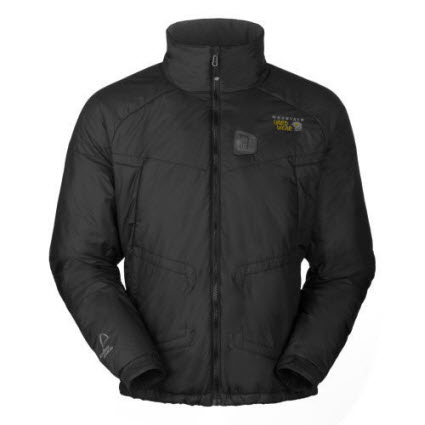
A Jacket Wired for Warmth and Gadgets


How often have you been in the freezing cold -- say, standing in a long lift line at a ski resort during a blizzard or sitting in the stands at Soldier Field in Chicago in December -- and thought you could use a little more warmth? And maybe a way to charge your MP3 player or mobile phone? Yeah, it happens to us all the time, too.Mountain Hardwear's Refugium jacket ($230) is pre-wired for a battery-powered Ardica Technologies heat-generation system that will keep you toasty for almost nine hours on the lowest setting (but also ups the price to about $375). Just press a tab on the front of the jacket to turn up the heat and activate one of three settings, which in turn sends warmth down your chest and back.

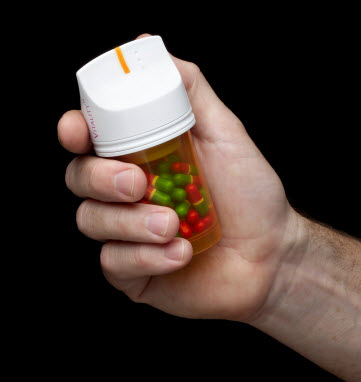
Electronic Medicine Reminder


Even the most disciplined among us sometime forget to take our medicine on schedule, and with a rapidly aging population it's become a big health problem. Vitality GlowCaps ($99) use technology to not only remind patients that it's time to take their meds, but also inform family members, caregivers, doctors and pharmacists that a prescription regimen is being followed and even when it's time for a refill.It works by using a wireless chip embedded in the GlowCaps, which fit standard prescription bottles. When it's medicine time, GlowCaps flash and emit a ringtone as a reminder. GlowCaps also come with a nightlight-like wireless reminder that plugs into an outlet and glows orange along with the bottle tops.

Today's featured picture


The cover of Puck from April 6, 1901, which depicts Columbia (the national personification of the United States) preening herself with an Easter bonnet in the form of a warship which bears the words "World Power". The bonnet plume resembles gunsmoke and bears the word "Expansion" in reference to territorial gains of the Spanish–American War. Following that war the concept of American Empire was first popularized, raising questions of whether the U.S. was acting in an imperialistic manner. Debate continues a century later about whether current U.S. foreign policy is more imperialistic or more of a hegemony.

On this day...


October 2: Sukkot begins at sunset (Judaism, 2009); International Day of Non-Violence; Gandhi Jayanti in India; Independence Day in Guinea

1535French explorer Jacques Cartier sailed along the St. Lawrence River and reached the Iroquois fortified village Hochelaga on the island now known as Montreal.
1835Mexican dragoons dispatched to disarm settlers at Gonzales, Texas encountered stiff resistance from a Texian militia in the Battle of Gonzales, the first armed engagement of the Texas Revolution.
1928 – Saint Josemaría Escrivá (pictured) founded Opus Dei, a worldwide organization of lay members of the Roman Catholic Church.
1941World War II: Nazi German forces began Operation Typhoon, an all-out offensive against Moscow, starting the three-month long Battle of Moscow.
1967Thurgood Marshall was sworn in as the first African-American Justice of the Supreme Court of the United States.
1992 – In response to a prison riot, military police stormed the Carandiru Penitentiary in São Paulo, Brazil, killing at least 100 prisoners.

Did you know...


that the map cowry (pictured) is collected both for its shell and for food?
... that American opera singer Margaret Harshaw portrayed more Wagnerian heroines on stage at the Metropolitan Opera than anyone else in the opera's history?
... that Arthur Wellesley, 1st Duke of Wellington helped popularize the Portuguese wine Bucelas in London after he discovered it while fighting in the Peninsular War?
... that the Ballston Spa, New York, post office was once located in an opera house?
... that baseball player Warren Cromartie filed an injunction against screening of the comedy film Cromartie High - The Movie because the (fictitious) school was portrayed as full of thugs and delinquents?
... that the mural by Leon Kroll in the Worcester Memorial Auditorium was the largest in the United States when completed?
... that Emmy Award winner and Golden Raspberry nominee John Herzfeld has directed films about the Long Island Lolita, the Preppie Murder, Ryan White, Don King, and 2 days in the Valley?
... that during one of several British airborne operations in North Africa, an officer knocked unconscious was heard to ask a waiter for fish?

Today's featured article


John W. Blassingame. Published in 1972, it is one of the first historiographies of slavery in the United States (The Old Plantation watercolor pictured) to be presented from the perspective of the enslaved. The Slave Community is a revisionist study challenging previous scholarship that suggests African American slaves were docile and submissive "Sambos" who enjoyed the benefits of a paternalistic master-slave relationship on southern plantations. Using psychology, Blassingame analyzes fugitive slave narratives published in the 19th century to conclude that an independent culture developed among the enslaved and that there were a variety of personality types exhibited by slaves other than the Sambo. Although the importance of The Slave Community was recognized by scholars of American slavery, Blassingame's conclusions, methodology, and sources were heavily criticized. Historians critiqued the use of slave narratives that were seen as unreliable and biased. They questioned Blassingame's decision to exclude the more than 2,000 interviews with former slaves conducted by the Works Progress Administration (WPA) in the 1930s. Historians argued that Blassingame's use of psychological theory proved unhelpful in his interpretation. Blassingame defended his conclusions at a 1976 meeting of the Association for the Study of Afro-American Life and History and in 1979 published a revised and enlarged edition of The Slave Community. Despite criticisms, The Slave Community is a foundational text in the study of the life and culture of slaves in the antebellum South.

History


The first smartphone was called Simon; it was designed by IBM in 1992 and shown as a concept product[9] that year at COMDEX, the computer industry trade show held in Las Vegas, Nevada. It was released to the public in 1993 and sold by BellSouth. Besides being a mobile phone, it also contained a calendar, address book, world clock, calculator, note pad, e-mail, send and receive fax, and games. It had no physical buttons to dial with. Instead customers used a touch-screen to select phone numbers with a finger or create facsimiles and memos with an optional stylus. Text was entered with a unique on-screen "predictive" keyboard. By today's standards, the Simon would be a fairly low-end product, however its feature set at the time was incredibly advanced.
The Nokia Communicator line was the first of Nokia's smartphones starting with the Nokia 9000, released in 1996. This distinctive palmtop computer style smartphone was the result of a collaborative effort of an early successful and expensive PDA model by Hewlett Packard combined with Nokia's bestselling phone around that time and early prototype models had the two devices fixed via a hinge; the Nokia 9210 as the first color screen Communicator model which was the first true smartphone with an open operating system; the 9500 Communicator that was also Nokia's first cameraphone Communicator and Nokia's first WiFi phone; the 9300 Communicator was the third dimensional shift into a smaller form factor; and the latest E90 Communicator includes GPS. The Nokia Communicator model is remarkable also having been the most expensive phone model sold by a major brand for almost the full lifespan of the model series, easily 20% and sometimes 40% more expensive than the next most expensive smartphone by any major manufacturer.
The Ericsson R380 was sold as a 'smartphone' but could not run native third-party applications.[10] Although the Nokia 9210 was arguably the first true smartphone with an open operating system, Nokia continued to refer to it as a Communicator.
In October, 2001 Handspring unveiled the Palm OS Treo smartphone, utilizing a full keyboard that combined wireless web browsing, email, calendar and contact organizer, with mobile third-party applications that could be downloaded or synced with a computer.[11]
In 2001 RIM released the first BlackBerry which was the first smartphone optimized for wireless email use and has achieved a total customer base of 8 million subscribers by June 2007, of which three quarters are in North America.
Although the Nokia 7650, announced in 2001, was referred to as a 'smart phone' in the media, and is now called a 'smartphone' on the Nokia support site, the press release referred to it as an 'imaging phone'.[12][13][14] Handspring delivered the first widely popular smartphone devices in the US market by marrying its Palm OS based Visor PDA together with a piggybacked GSM phone module, the VisorPhone. By 2002, Handspring was marketing an integrated smartphone called the Treo; the company subsequently merged with Palm primarily because the PDA market was dying but the Treo smartphone was quickly becoming popular as a phone with extended PDA organizer features. That same year, Microsoft announced its Windows CE Pocket PC OS would be offered as "Microsoft Windows Powered Smartphone 2002".[15] Microsoft originally defined its Windows Smartphone products as lacking a touchscreen and offering a lower screen resolution compared to its sibling Pocket PC devices. Palm has since largely abandoned its own Palm OS in favor of licensing Microsoft's WinCE-based operating system now referred to as Windows Mobile.
In 2005 Nokia launched its N-Series of 3G smartphones which Nokia started to market not as mobile phones but as multimedia computers.
There is no agreement in the industry about what precisely constitutes a "smart" phone, and definitions have changed over time.[2] According to David Wood, EVP at Symbian Ltd., "Smart phones differ from ordinary mobile phones in two fundamental ways: how they are built and what they can do."[7] Other definitions put different stresses on these two factors...
"With smart phones it's just one evolution in a series of evolutions, so it might be that the actual device at some point ... will become even smaller and we will not call it a phone anymore, but it will be integrated ... the deal here is to make the device as invisible as possible, between you, and what you want to do," says Sacha Wunsch-Vincent at the OECD.[8]
Most devices considered smartphones today use an identifiable operating system, often with the ability to add applications (e.g. for enhanced data processing, connectivity or entertainment) - in contrast to regular phones which only support sandboxed applications (like Java games).[citation needed] These smartphone applications may be developed by the manufacturer of the device, by the network operator or by any other third-party software developer, since the operating system is open.[citation needed]
In terms of features, most smartphones support full featured email capabilities with the functionality of a complete personal organizer. Other functionality might include an additional interface such as a miniature QWERTY keyboard, a touch screen or a D-pad, a built-in camera, contact management, an accelerometer, built-in navigation hardware and software, the ability to read business documents, media software for playing music, browsing photos and viewing video clips, internet browsers or even just secure access to company mail, such as is provided by a BlackBerry. One common feature to the majority of the smartphones is a contact list able to store as many contacts as the available memory permits, in contrast to regular phones that has a limit to the maximum number of contacts that can be stored.

Smartphone


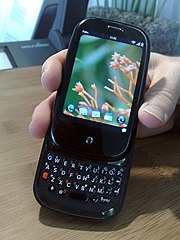
A smartphone is a mobile phone offering advanced capabilities, often with PC-like functionality (PC-mobile handset convergence). There is no industry standard definition of a smartphone.[1][2] For some, a smartphone is a phone that runs complete operating system software providing a standardized interface and platform for application developers.[3] For others, a smartphone is simply a phone with advanced features like e-mail, Internet and e-book reader capabilities, and/or a built-in full keyboard or external USB keyboard and VGA connector. In other words, it is a miniature computer that has phone capability.[4][5]
Growth in demand for advanced mobile devices boasting powerful processors, abundant memory, large screens and open operating systems has outpaced the rest of the mobile phone market for several years.[6]

Cell Phones and Handheld Electronics


It's a handheld world
As 21st Century gadgets go, cell phones are taking over the world. The phone's eminence was long prophesized by the most famous fictional gadget in TV history, the Shoe Phone used by aThe cell phone started off as simply a mobile voice communications device, allowing its user to take the handset with them anywhere within range of a compatible telephone network, or cell. The cell phone user can then dial a phone number directly on the handset's keypad. Radio waves transmitted from the handset are received by the network to conduct a conventional telephone circuit switch to the other party's telephone.
Modern cell phones that can take advantage of wireless data networks can dial through packet switching over internet access and WAP (Wireless Access Protocol) services. Many of the cell phones today can take advantage of GSM and GPMS networks for access to wireless voice and data networks but require subscriptions for the appropriate data types used by the handset you own.
Today's cell phones aspire to so much more than voice communication. Culminating in the Smartphone, cell phones today double as mobile computing devices. They can act as palm-sized personal organizers, run business applications like Windows Mobile Office Suite or as a SMTP/POP3 email client that can send and receive email from anywhere using your home or business email account. PDA devices that double as complete wireless communication devices include the Blackberry, Palm Treo and a variety of Smartphones by the likes of Nokia and other leading cell phone manufacturers.gent 86 on the 60s show, Get Smart:

Nokia 5800 XpressMusic Smart Phone


When it comes to music phones, people all over the world want a device that is a great music experience--with more memory, loud and powerful speakers, easy synchronization--but...

Tuesday, September 29, 2009

On the Go With Windows Live for Mobile


You no longer need to be tied to your PC to access all of your favorite Windows Live programs and features. Windows Live for Mobile lets you to do it from your cell phone while on the go.You can check your Hotmail, Windows Live and MSN e-mail accounts while getting the same experience you would on a PC -- graphics, Web links and photos -- and even respond to e-mails with voice recordings. With Windows Messenger, you can use Windows Live for Mobile to IM and join chat groups, check who's online, and send and receive photos and files.Using Windows Live Spaces, you can keep friends posted with updates from your phone, upload photos taken with your phone's camera and add blog entries to go with your pics. And with Bing built in, you can quickly find businesses as well as get maps and traffic info. You can also download Microsoft programs such as Office Mobile, Outlook Mobile and Internet Explorer to your mobile phone.